Entry-Level Flight Attendant Salary in Hot Springs, AR: $31,399 (2026)
Quick Answer:New flight attendants entering the Hot Springs, AR job market in 2026 can expect a starting salary around $31,399 (BLS 10th-percentile benchmark for SOC 53-2031, projected from 2025 OEWS data). Stripping out Hot Springs's local price level (BEA RPP 86.9 — 13% below national), a first-year paycheck buys what $36,132 would in average-cost America. Most reach the city median ($54,136) within a few years of clinical practice.
Based on BLS state-level estimates · View source
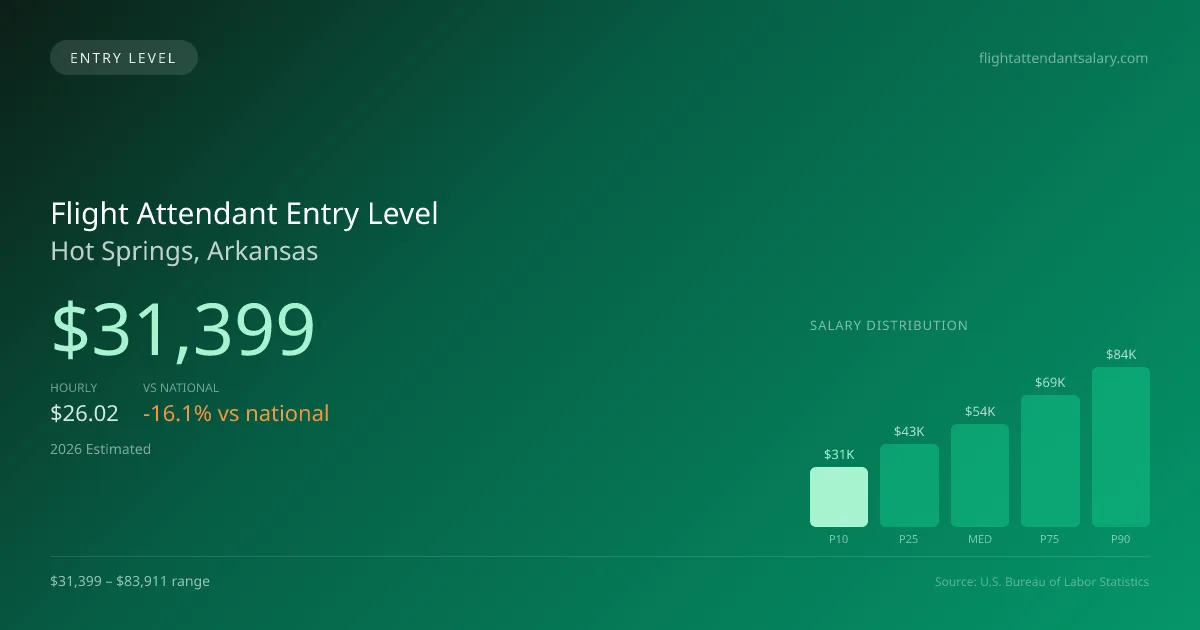
In 2026, those pursuing an entry-level flight attendant position in Hot Springs, Arkansas, can expect a starting salary around $31,399. This figure is significantly lower than the city’s median salary of $54,136, highlighting a notable gap in earnings that new graduates should be aware of. However, the entry-level salary can increase steadily over a few years; as one gains experience, the pay can rise to approximately $43,432 at the 25th percentile, ultimately reaching the median as flight attendants progress in their careers. Given the growing demand in the aviation sector, especially with an annual growth rate of 1.49%, Hot Springs presents a feasible market for new graduates seeking to embark on a flight attendant career.
About the Hot Springs Market
Salary estimated from Arkansas average ($52,000) adjusted for local cost of living.
Career Earnings Timeline in Hot Springs
New Graduate
Early Career
Mid Career
Experienced
Salary progression estimated from BLS percentile data. Actual progression varies by employer, certifications, and specialization.
2026 Salary Percentile Distribution in Hot Springs
Entry-level flight attendants in Hot Springs, AR typically start between $31,399 and $43,432 per year (2026 est.). The full salary range spans $52,512 from the 10th to 90th percentile, with the local median at $54,136 — 16.1% below the national median.
Return on Investment
The average aviation program cost in Arkansas of $1,500 represents just 4.78% of the starting flight attendant pay ($31,399/year) in Hot Springs. Most graduates begin earning back their investment from day one, though actual ROI varies based on living expenses, loan interest, and the 2-year opportunity cost of schooling.
Initial training is typically provided (paid or unpaid stipend) by the hiring airline, so direct tuition costs are minimal. Some candidates attend optional preparatory flight attendant schools. Cost estimates primarily reflect travel, relocation, and pre-training preparatory expenses.
FA Salary Negotiation Tips for New Graduates in Hot Springs
- 1Research the Hot Springs market: entry-level flight attendant pay ranges from $31,399 to $43,432, so aim for at least the 25th percentile if you have strong credentials.
- 2Highlight any additional certifications or specialty training within the aviation field — employers in AR often pay a premium for expanded scope of work.
- 3Evaluate the full compensation package — in Hot Springs, benefits like health insurance, continuing-education allowances, and schedule flexibility can add 20-30% to your effective compensation.
- 4Consider starting with a larger hospital system or multi-site employer in Hot Springs for competitive entry-level pay and structured mentorship, then move to a smaller employer once you have 2-3 years of experience.
- 5Hot Springs's below-average cost of living means your starting salary goes further here compared to many larger metro areas.
Flight Attendant Compensation Range
The flight attendant wage spread in Hot Springs is $52,512 ( 167.24%) between entry-level and top earners. Starting at $31,399, experienced hygienists can earn up to $83,911.
Represents the current salary spread across experience levels, not projected career growth rate.
2019 BLS Actual
$25,792
2025 BLS Actual
$30,938
2026 Current Est.
$31,399
2019–2027 Growth
+23.6%
Salary Trajectory for Flight Attendants in Hot Springs (2019–2027)
2019–2025: actual BLS OEWS data for this metro area. 2026+: CAGR 1.49% projection.
| Year | Annual Salary | Status |
|---|---|---|
| 2019 | $25,792 | Actual |
| 2020 | $27,255 | Actual |
| 2021 | $32,621 | Actual |
| 2022 | $33,211 | Actual |
| 2023 | $34,877 | Actual |
| 2024 | $25,652 | Actual |
| 2025 | $30,938 | Actual |
| 2026(current) | $31,399 | Estimated |
| 2027 | $31,867 | Projected |
Entry-level flight attendant compensation (10th percentile) in Hot Springs, AR grew 20.0% over 7 years based on actual BLS metropolitan area surveys, rising from $25,792 in 2019 to $30,938 in 2025. By 2027, starting salaries are projected to reach $31,867. New graduates entering the Hot Springs job market can expect continued year-over-year gains.
Note: Historical values (2019–2025) are actual BLS OEWS figures for the Hot Springs metropolitan area, sourced from annual Occupational Employment and Wage Statistics surveys. 2026–2026 figures are current estimates, and 2027 values are projections, calculated using a 1.49% CAGR derived from 7-year BLS historical data. Actual salaries may vary based on employer, experience, certifications, and local market conditions.
Starting Your aviation Career in Hot Springs
When considering employment opportunities, several key players in the aviation industry around Hot Springs hire new grads. Regional airlines such as SkyWest, Republic, and Mesa are often the most accessible options, offering structured training programs and a quicker path to promotion, although at lower pay scales. On the other hand, major airlines like Delta and United present competitive entry points, typically showcasing low acceptance rates for applicants. Low-cost carriers like Spirit and Frontier may also offer entry positions with streamlined training regimes. New entrants to the field should prioritize obtaining an FAA-issued Certificate of Demonstrated Proficiency, as it can enhance job prospects and starting salary potential. Proficiency in a second language becomes essential for international routes, further influencing entry-level remuneration. Given that the pay scale in this profession is based on seniority, it’s vital to develop a career strategy that focuses on gaining experience and qualifications during the first 1-3 years—an investment that is likely to lead to more lucrative opportunities in the long run in a city like Hot Springs, where the initial new grad flight attendant pay AR may feel limiting but offers room for growth.
More salary data for Hot Springs, AR:
Frequently Asked Questions
What is the starting salary for flight attendants in Hot Springs in 2026?
How fast do flight attendant salaries grow in Hot Springs?
Is aviation school worth it in Hot Springs?
What do new flight attendants make right out of school in Hot Springs?
How do I become a flight attendant in Arkansas?
Related Pages
Compare Salaries
Career Resources
Nearby Cities in Arkansas
Written by Emily Johnson, AFA-CWA
Career Analyst
Emily Johnson has 10 years of experience as a flight attendant. She specializes in passenger safety and service. She has worked for major airlines in the United States.
Methodology & Data Source
Entry-level salary figures on this page are 2026 projections based on the Bureau of Labor Statistics Occupational Employment and Wage Statistics (OEWS) survey, May 2026 release. The 10th percentile (entry-level) is used as the starting salary benchmark for new aviation graduates. A 1.49% compound annual growth rate (CAGR), derived from 6-year national BLS wage trends, was applied to project current 2026 entry-level compensation in Hot Springs. Program costs are averages and actual tuition varies by institution. ROI calculations are simplified estimates.
Data Sources & Methodology
Salary data for Hot Springs is estimated from official BLS state-level occupational wage data (2025), adjusted for regional cost-of-living differences using BEA RPP (Regional Price Parities).
2026 figures are projected from 2025 BLS data using a compound annual growth rate (CAGR) of 1.49%, derived from historical BLS wage trends for flight attendants (SOC 53-2031).
Compiled and verified by Emily Johnson, AFA-CWA, a licensed flight attendant with 10+ years of clinical experience. · View source data at BLS.gov